- English
- 简体中文
- Esperanto
- Afrikaans
- Català
- שפה עברית
- Cymraeg
- Galego
- 繁体中文
- Latviešu
- icelandic
- ייִדיש
- беларускі
- Hrvatski
- Kreyòl ayisyen
- Shqiptar
- Malti
- lugha ya Kiswahili
- አማርኛ
- Bosanski
- Frysk
- ភាសាខ្មែរ
- ქართული
- ગુજરાતી
- Hausa
- Кыргыз тили
- ಕನ್ನಡ
- Corsa
- Kurdî
- മലയാളം
- Maori
- Монгол хэл
- Hmong
- IsiXhosa
- Zulu
- Punjabi
- پښتو
- Chichewa
- Samoa
- Sesotho
- සිංහල
- Gàidhlig
- Cebuano
- Somali
- Тоҷикӣ
- O'zbek
- Hawaiian
- سنڌي
- Shinra
- Հայերեն
- Igbo
- Sundanese
- Lëtzebuergesch
- Malagasy
- Yoruba
- Español
- Português
- русский
- Français
- 日本語
- Deutsch
- tiếng Việt
- Italiano
- Nederlands
- ภาษาไทย
- Polski
- 한국어
- Svenska
- magyar
- Malay
- বাংলা ভাষার
- Dansk
- Suomi
- हिन्दी
- Pilipino
- Türkçe
- Gaeilge
- العربية
- Indonesia
- Norsk
- تمل
- český
- ελληνικά
- український
- Javanese
- فارسی
- தமிழ்
- తెలుగు
- नेपाली
- Burmese
- български
- ລາວ
- Latine
- Қазақша
- Euskal
- Azərbaycan
- Slovenský jazyk
- Македонски
- Lietuvos
- Eesti Keel
- Română
- Slovenski
- मराठी
- Srpski језик

直接耦合羅茨鼓風機權威工程指南
本指南探討了工程基礎、操作機制和工業應用直接耦合羅茨鼓風機. We dissect why direct-drive configurations outperform belt-driven systems in reliability, efficiency, and noise control, while detailing installation best practices and maintenance protocols. From wastewater aeration to pneumatic conveying, this resource provides actionable insights for engineers and plant operators seeking to optimize their gas-handling infrastructure.
▍ 目錄
1. 直聯式羅茨鼓風機:核心概念
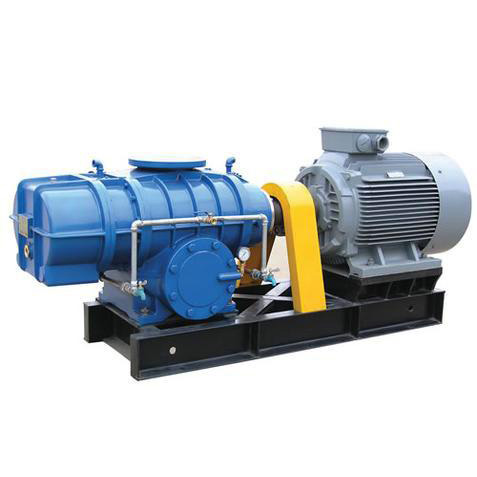
從廢水處理到氣動輸送,無數工業流程的核心在於強大的技術直接耦合羅茨鼓風機. Unlike belt-driven alternatives, these units feature a direct mechanical link between the motor and the blower shaft via a coupling. This seemingly simple distinction yields profound benefits in efficiency, durability, and operational stability. By eliminating the belt, the system eradicates a common point of wear and energy loss, making Direct Coupling Roots Blowers a preferred choice for continuous-duty applications where reliability is paramount.
這種直接配置可確保馬達的轉速精確地傳遞到葉輪,從而提供穩定、無脈動的氣流,這對於生物處理中的曝氣或水泥廠中的材料運輸等過程至關重要。設計理念以最小的機械損失和最長的正常運行時間為中心,這就是為什麼具有嚴格操作要求的行業越來越多地採用這種驅動方法而不是傳統的皮帶系統。
2. 直聯式旋轉正位移的機理
直接耦合羅茨鼓風機 operate on the positive displacement principle, utilizing two or three-lobe rotors that rotate in opposite directions within a precisely machined casing. The direct coupling ensures these rotors maintain exact synchronization, driven by timing gears that prevent metal-to-metal contact. As the lobes rotate, they trap a fixed volume of air at the intake port and transport it to the discharge side, where it is expelled against system pressure.
The key mechanical advantage lies in the coupling itself. A flexible coupling, often of the taper-lock style, connects the motor shaft to the blower shaft, accommodating minor misalignments while transmitting torque efficiently. This direct drive eliminates the slippage inherent in belt systems, ensuring that the blower operates precisely at its designed speed, which directly correlates to a guaranteed volumetric flow rate. This characteristic is essential for processes requiring a consistent, metered air supply, such as in chemical dosing or fluidized bed reactors.
3. 相對於皮帶驅動系統的性能優勢
When evaluating Direct Coupling Roots Blowers against belt-driven counterparts, several performance differentiators emerge. First, the direct coupling eliminates belt tensioning and wear, which not only reduces maintenance frequency but also prevents the gradual loss of efficiency as belts stretch over time. Second, the absence of a belt and pulley assembly reduces the overall footprint and weight of the unit, simplifying installation and integration into compact plant layouts.
Furthermore, direct-drive systems exhibit lower vibration levels and operate more quietly, contributing to a safer and more comfortable working environment. The reduced mechanical complexity means fewer components are subject to failure, enhancing the overall reliability of the system. In applications where space is constrained or where continuous, high-load operation is required, direct coupling provides a decisive advantage in terms of both performance stability and lifecycle cost considerations.
| 範圍 | 直接耦合 | 皮帶驅動 |
|---|---|---|
| 效率(功率傳輸) | 高(無滑差損失) | 中(皮帶打滑和摩擦) |
| 維護頻率 | 低(無需更換皮帶) | 高(皮帶張緊和更換) |
| 腳印 | 袖珍的 | 更大(需要滑輪空間) |
| 振動與噪音 | 降低 | 更高 |
| 速度精度 | 精確(固定比例) | 變數(皮帶打滑) |
4. 安裝與對準:精度確保使用壽命
成功部署直接耦合羅茨鼓風機 hinges on meticulous installation, particularly shaft alignment. Even minor misalignment can induce excessive vibration, premature bearing wear, and coupling fatigue. Industry best practices dictate that the coupling halves must be installed with an interference fit, often requiring controlled heating, to ensure a secure connection to the shafts.
Proper alignment involves checking both offset and angular deviations. For optimal service life, the total indicator reading (TIR) on the coupling hubs should not exceed 0.005 inches (0.13 mm), and the parallel deviation of coupling faces should be within 0.001 inches (0.03 mm). Additionally, it is critical to establish the correct axial gap between coupling halves to accommodate thermal expansion of the shafts during operation, preventing thrust loading that could damage the blower's internal components. Using a taper-lock style coupling is recommended to ensure positive torque transmission and ease of removal.
5. 直接驅動裝置的維護協議
While Direct Coupling Roots Blowers require less frequent intervention than belt-driven units, a structured maintenance schedule is essential. The primary focus areas include lubrication of the gearbox and bearings, coupling inspection, and verification of alignment. Regular oil changes using the manufacturer-recommended lubricant prevent gear wear and ensure smooth operation.
Periodic coupling checks should involve visual inspection for wear or cracks, and re-torquing of fasteners to specified values. Vibration monitoring can serve as a predictive maintenance tool, detecting early signs of imbalance or misalignment. Additionally, ensuring the intake air filter is clean and unobstructed will protect the rotors from particulate damage, maintaining the clean, oil-free air output that is a hallmark of these blowers.
- 日常的:檢查油位,聆聽是否有異常噪音,監控排氣壓力和溫度。
- 每月:檢查聯軸器是否磨損,驗證對準情況,清潔空氣過濾器。
- 季刊:更換齒輪油,檢查軸承,檢查所有緊固件扭力。
- 每年:全面檢修,包括轉子間隙測量和密封件更換。
6. 關鍵工業應用
The robust design and reliable performance of Direct Coupling Roots Blowers make them indispensable across a wide range of sectors. In wastewater treatment, they provide essential aeration for aerobic digestion, ensuring the biological breakdown of organic matter. In the aquaculture industry, they maintain critical dissolved oxygen levels in ponds and tanks, directly impacting stock health and yield.
For bulk material handling, these blowers are used in pneumatic conveying systems to transport cement, grains, plastics, and other powders through pipelines. The stable, high-pressure airflow ensures consistent and efficient material transfer over long distances. Other key applications include combustion air supply in furnaces, gas boosting in petrochemical plants, and vacuum packaging operations, demonstrating the versatility of this technology across the industrial spectrum.
主要應用領域:廢水曝氣·水產養殖·氣力輸送·水泥工業·發電廠·化學加工·沼氣處理
7. 主要技術規格及選用指南
選擇正確的直接耦合羅茨鼓風機 for an application requires careful analysis of flow rate, pressure, and power requirements. Typical units offer flow rates ranging from as low as 0.6 m³/min to over 120 m³/min, with discharge pressures up to 98 kPa. Motor power can span from 1.1 kW for smaller units to over 185 kW for large-scale industrial models.
When specifying a blower, consider the required differential pressure, the desired flow rate at that pressure, and the ambient operating conditions. The three-lobe rotor design has become the industry standard for its improved pulsation characteristics and efficiency compared to older two-lobe designs. Consulting performance curves and technical datasheets is crucial to ensure the selected blower operates at its optimal efficiency point, delivering reliable service for the intended application.
| 範圍 | 典型範圍 | 筆記 |
|---|---|---|
| 流量 (Qs) | 0.6 – 120 立方公尺/分鐘 | 取決於速度和鼓風機框架尺寸 |
| 排出壓力 | 9.8 – 98 千帕 | 常見應用高達 60 kPa |
| 馬達功率 | 1.1 – 185 千瓦 | 與壓力和流量成正比 |
| 轉速 | 980 – 1980 轉/分 | 由馬達速度固定(直接驅動) |
| 轉子設計 | 三葉 | 提高效率的標準 |
| 噪音水平 | < 85 分貝 | 附標準消音器 |
8. 常見問題(FAQ)
主要優點是可靠性增強(皮帶不會磨損或斷裂)、傳動效率更高(無滑動損失)以及氣流更穩定,尤其是在變化的壓力條件下。它還減少了維護頻率和整體營運足跡。
建議在每月維護期間目視檢查聯軸器並檢查緊固件的扭矩是否正確。應每季或在重大干擾或維護事件發生後隨時進行更全面的檢查,包括對準驗證。
這意味著鼓風機轉子每轉一圈就會移動固定的預定量的空氣。此特性可確保流量一致,且很大程度上獨立於排氣壓力,使其成為需要穩定空氣輸送的應用的理想選擇。